
Buying Local, Buying Better: The Real Cost of Cheap Footwear
Why investing in well-made local footwear works out better — economically, environmentally and culturally — than rotating through cheap imports.
The average person throws away a pair of shoes every eight months. Most end up in landfill, where synthetic materials and adhesives take decades to break down. The labour conditions producing inexpensive footwear at scale are, in many documented cases, deeply problematic. None of this is secret knowledge — but it often feels abstract from the immediate decision of what to put on your feet today.
The True Cost of a Cheap Sandal
When you buy a pair of sandals for a few hundred rupees, the price reflects genuine choices made at every stage of production. The material is almost certainly synthetic — a plastic-based imitation that will peel, crack, and break down within months. The adhesives are chemical-heavy. The labour is undercompensated.
The short lifespan is built in, not accidental. The business model depends on rapid replacement. Across a year, you might spend as much on a rotation of cheap sandals as you would on a single well-made pair — and at the end, you have plastic waste in a landfill while the well-made pair is still on your feet.
What Local Production Actually Means
When you buy footwear made locally in Pakistan — by Pakistani craftspeople, from a Pakistani brand — the economic geography is fundamentally different. Money stays in the local economy. Skills are valued and compensated within your community. The supply chain is significantly shorter and more traceable than global fast fashion.
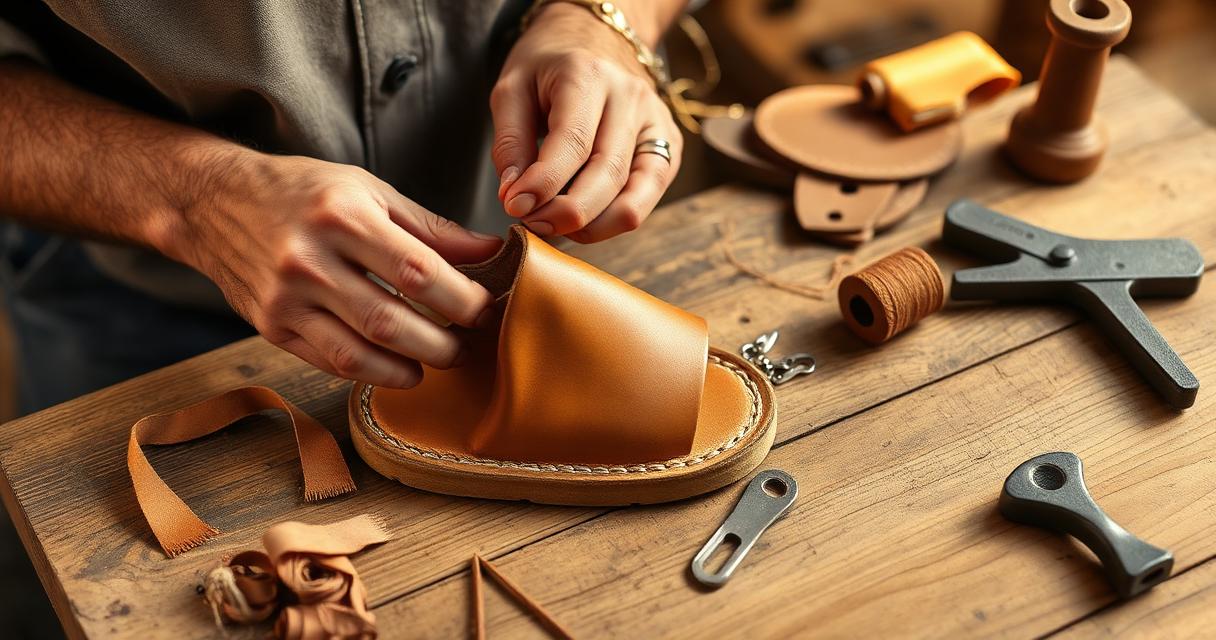
Pakistan has a genuine tradition of skilled shoemaking. The craft lineages in Lahore, Multan, and Peshawar carry generations of accumulated knowledge. Aven by Zoya's model is built around this kind of local engagement — sandals made by skilled craftspeople whose work is reflected in the quality of the finished product.
The Material Question
Genuine leather is a natural material that biodegrades and can last for years with proper care. Quality vegan alternatives perform well over extended use. The problem is not leather versus synthetic as categories — the problem is cheap synthetic materials that offer neither the durability of good leather nor the improved environmental profile of well-made vegan alternatives.
When evaluating footwear, pay attention to weight and texture. Cheap imitation materials are light, slightly papery, with an artificial sheen.
The Longevity Calculation
Take the price and divide by the number of times you reasonably expect to wear it. A three-hundred rupee sandal worn fifteen times costs twenty rupees per wear. A two-thousand rupee handcrafted sandal worn two hundred times over two or three seasons costs ten rupees per wear — and produces far less waste.
Footwear changes in fashion far less rapidly than clothing. A well-made pair of neutral sandals in a clean silhouette will look appropriate and contemporary for five years or more.
Supporting the Craft
Skills disappear when they are not economically viable. The traditional craft knowledge of Pakistani cobblers and shoemakers is under pressure from the same forces as traditional crafts everywhere. When consumers choose quality local craft over cheap imports, they create the economic conditions for those skills to survive.
Practical Steps Toward Better Choices
The practical suggestion is simpler than overhauling your wardrobe overnight. Next time you need a new pair of sandals, extend your budget slightly, look for local makers, and buy with intention to keep the shoes for two or three seasons rather than one. Take care of what you buy. Repair rather than replace when small things go wrong.
Choose local, choose craft — explore the full collection at Aven by Zoya. Shop the collection →