
The Art of Handcrafted Footwear: Why It Matters
What 'handcrafted' really means in footwear — and why the difference is worth choosing intentionally.
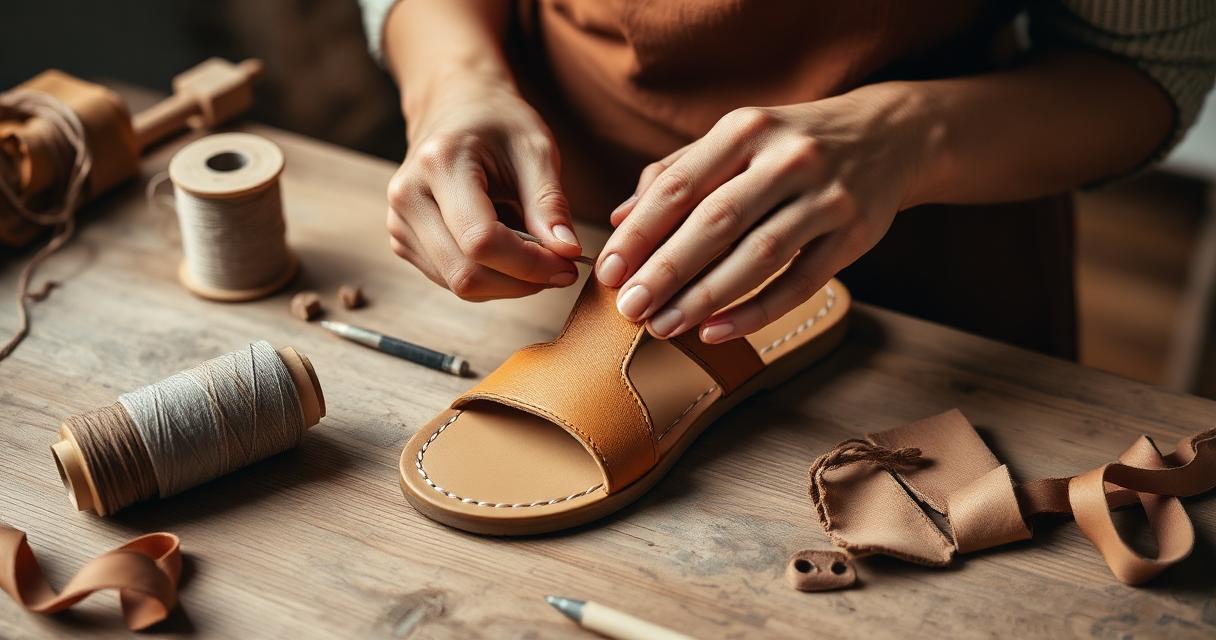
In an era of fast fashion and mass production, the phrase 'handcrafted' has been used so liberally that it has almost lost its meaning. It appears on packaging, in brand slogans, and across social media — sometimes attached to products that have very little hand involvement at all. Which makes it all the more important to understand what genuine handcrafted footwear actually involves, and why it makes a difference to the person wearing it.
What Handcrafted Really Means
Handcrafted footwear is footwear where skilled artisans are directly involved in the production process — shaping, cutting, stitching, or finishing by hand rather than relying entirely on automated machinery. This does not mean machines play no role, but the human element is central, not incidental.
In practice, this means each pair receives individual attention. It means imperfections are caught and corrected by a human eye. It means the maker has a sense of ownership over the final product that a factory line worker operating a single automated station simply cannot replicate.
The Quality Difference
The difference between handcrafted and mass-produced footwear often shows up most clearly over time. Machine-produced shoes are built for speed and volume. Handcrafted shoes are built with care for durability and finish. The stitching tends to be more even. The adhesion tends to hold longer. The edges and finishing details tend to be cleaner.
This is not a blanket generalisation — there is plenty of excellent machine-made footwear and poorly made handcrafted footwear in the world. But when a brand commits genuinely to the handcrafted process, the product usually reflects that commitment in ways you can feel underfoot and see in the details.
Supporting Local Artisanship
Choosing handcrafted footwear also means choosing to support the artisans behind it. Pakistan has a rich tradition of skilled cobblers and shoemakers, many of whom carry generational knowledge of their craft. When a local brand like Aven by Zoya works with these craftspeople and brings their skills into contemporary design, it creates a direct economic link between consumer choice and artisan livelihood.
This is not a sentimental argument — it is a practical one. When we buy from brands that invest in skilled local labour, we help sustain the very craft traditions that make distinctive, quality products possible.
Design That Reflects Intention
There is something else that handcrafted products carry that is hard to quantify but easy to feel: intention. When a designer works closely with makers on a limited range of styles, each detail — the width of a strap, the choice of hardware, the weight of the sole — is a deliberate decision rather than a default. The result is footwear that feels thought-through rather than generic.
This is evident in the way Aven by Zoya names its styles after birds — Crane, Plover, Ibis, Thrush. There is a quiet personality to that choice. It signals that someone cared about more than just producing another pair of shoes.
Discover the full handcrafted collection at Aven by Zoya. Shop the collection →